Tax Newsletter - October 2025
In this Month's Issue:
- Issue 1 – Tips Codes Released Early for 2026 Use
- Issue 2 – IRS Commissioner Discusses Filing Season Prediction
- Issue 3 – IRS Guidance on § 174 Research Costs
- Issue 4 – Treasury Announces Federal Government Will Phase Out Paper Checks on September 30th
- Issue 5 – Updated Stay Exempt resources on IRS.gov
- Issue 6 – FinCEN Unveils User-Friendly Changes to FinCEN.gov
- Issue 7 – ICE and IRS Reach Agreement to Share Taxpayer Information of Suspected Undocumented Immigrants
- Issue 8 – New Look for the EIN Online Application
- Issue 9 – VIN Verification for Energy Efficient Vehicles
- Issue 10 – Extension of Replacement Period for Livestock Sold on Account of Drought
- Issue 11 – IRS Issues Final Rules on Roth Catch-Up Contributions
- Issue 12 – Assisting Your Clients with Reporting Proceeds from Certain Digital Asset Transactions
- Issue 13 – New Code “Y” on Form 1099R
- Issue 14 – SALT Cap Issues
- Issue 15 – Obtaining A Copy of Gift Tax Returns Previously Filed
- Issue 16 – Last Chance to Enroll in EFTPS
- Issue 17 – Applicable Federal Rates for October 2025, Rev. Rul. 2025-19
- FAQs – Frequently Asked Questions

 Issue 1 – Tips Codes Released Early for 2026 Use – see link below for 2026 W-2 and below that, the list of Tip Codes
Draft of the 2026 Form W-2 provides some clues to what to expect concerning overtime wages and tips in 2026. IRS has stated we will not see any changes for the 2025 form. The 2026 form will be used in the 2027 filing season. For 2025 we are required to use any reasonable method to track overtime wages and tips for reporting information for 2025. So, they must be report to the employee.
New Codes for the 2026 Form W-2 that apply to Box 12
- TA - Employer contributions to your Trump account.
- TP - Total amount of qualified tips. Use this amount in determining the deduction for qualified tips on Sch. 1-A (Form 1040).
- TT - Total amount of qualified overtime compensation. Use this amount in determining the deduction for qualified overtime compensation on Sch. 1-A (Form 1040).
- Box 14b - Employers use this box to report on the Treasury Occupation Code for your tipped occupation. Use this code in reporting the deduction for qualified tips on Sch. 1-A (Form 1040).
The above is from the instructions on Form W-2 stated after Copy 2. Scroll down to Copy 2 and the next pages have the codes.
The Form is in Draft Form and could change. Please note it mentions Form 1040 Schedule -1-A. To view draft form, follow link: 2026 W-2 Draft 📌
To view the preliminary tip codes, to be input in the New Box 14b, click on the link below:
Treasury and the Internal Revenue Service has provided additional guidance on “no tax on tips” provision. The One, Big, Beautiful Bill proposed regulations identify occupations customarily and regularly receive tips and define “qualified tips” eligible taxpayers may claim as a deduction. list nearly 70 separate occupations of tipped workers, from bartenders to water taxi operators.
List of occupations that receive tips
Treasury Tipped Occupation Code provides a three-digit code and descriptions for the occupations listed within the proposed regulations. The
proposed regulations group 📌 the occupations into eight categories:
- 100s – Beverage and Food Service
- 200s – Entertainment and Events
- 300s – Hospitality and Guest Services
- 400s – Home Services
- 500s – Personal Services
- 600s – Personal Appearance and Wellness
- 700s – Recreation and Instruction
- 800s – Transportation and Delivery
Definition of qualified tips
In order to claim the deduction, a worker must both be in an occupation on the list and receive qualified tips. The proposed regulations provide a definition of qualified and not qualified tips which include the following factors:
- Qualified tips must be paid in cash or an equivalent medium, such as check, credit card, debit card, gift card, tangible or intangible tokens that are readily exchangeable for a fixed amount in cash, or another form of electronic settlement or mobile payment application (excluding most digital assets) denominated in cash.
- Qualified tips must be received from customers or, in the case of an employee, through a mandatory or voluntary tip-sharing arrangement, such as a tip pool.
- Qualified tips must be paid voluntarily by the customer and not be subject to negotiation. Qualified tips do not include some service charges. For instance, in the case of a restaurant that imposes an automatic 18% service charge for large parties and distributes that amount to waiters, bussers and kitchen staff; if the charge is added with no option for the customer to disregard or modify it, the amounts distributed to the workers from it are not qualified tips.
- Any amount received for illegal activity, prostitution services, or pornographic activity is not a qualified tip.
Issue 2 – IRS Commissioner Discusses Filing Season Prediction
The IRS has clarified via various outlets that no firm start date has been set for the 2026 tax filing season, walking back recent remarks made by Commissioner Billy Long suggesting a President’s Day launch.
Commissioner Long, during a recent speech, mentioned the potential for a delayed start to accommodate the implementation of the One Big Beautiful Bill Act (P.L. 119-21). This sweeping legislation introduces new deductions, including changes to tips, overtime pay and a deduction for seniors, offering potential financial relief to many.
However, in response to the Commissioner’s statement, the IRS noted that comments should not be interpreted as an official schedule.
Historically, the IRS opens the filing season in late January. A mid-February kickoff such as President’s Day falls on Feb. 16 would represent the latest start since 2021, when returns were first accepted on Feb. 12.
This ambiguity comes as the IRS grapples with the loss of 25% of its workforce since the beginning of the year, following workforce reduction efforts. The attrition includes thousands of taxpayer services staff, underscoring the challenges ahead. However, the IRS remains committed to its modernization efforts, which will help it adapt to these changes.
Issue 3 – IRS Guidance on § 174 Research Costs
On Aug. 28, 2025, the IRS and Treasury released
Rev. Proc. 2025-28 📌 outlining the accounting method changes taxpayers can use to implement the reversal of amortization of domestic research costs.
The 2025 reconciliation bill permanently reinstated immediate expense of research and experimental (R&E) costs under §174A, reversing the five-year amortization requirement originally imposed by the Tax Cuts and Jobs Act (TCJA). This change provides relief to taxpayers who invest heavily in R&E. The latest revenue procedure is focused on compliance – specifically how to adopt or change accounting methods to reflect the return to immediate deduction.
Key takeaways from the Rev. Proc include:
- Guidance regarding how to recover any remaining domestic research or experimental costs incurred or paid in full in tax years beginning after Dec. 31, 2021, and before Jan. 1, 2025, in the first taxable year beginning after Dec. 31, 2024, for eligible small businesses
- Ability to amortize such costs over two years instead
- Late election or revocation of §280C(c)(2) election for small businesses using the retroactive rules
- Automatic six-month extension for superseding 2024 returns for certain partnerships, S corporations, corporations, individuals, trusts/estates and exempt organizations to implement the small-business retroactive election
It’s important to note that guidance addressing the technical application of §174 is still pending. For now, Rev. Proc. 2025-28 joins the growing list of procedural updates issued since the amortization requirement took effect for tax years beginning after Dec. 31, 2024.
Issue 4 – Treasury Announces Federal Government Will Phase Out Paper Checks on September 30th
The U.S. Department of the Treasury announced that the federal government will stop issuing paper checks for most federal payments on September 30, 2025. If your client is one of the few people who still receives a federal benefit check, it’s time to switch to an electronic payment method.
No action is required for the vast majority of Americans who already receive federal benefit payments electronically.
If the client is still receiving a paper check for Social Security, Veterans benefits, or any other Federal benefit, enroll in direct deposit using one of the following options:
- Call the Federal agency that pays your benefits and follow their instructions for enrolling in direct deposit. A list of the paying agencies’ contact information can be found here 📌 .
- Enrolling online at GoDirect.gov 📌 .
- Call the Electronic Payment Solution Center at 800-967-6857, Monday – Friday 9:00 a.m.-7:00 p.m. ET
If the client does not have a bank account to receive direct deposit they can safely access resources to open an account at FDIC: Get Banked 📌 or
MyCreditUnion.gov 📌 .
The client can also sign up for a Direct Express® Debit Mastercard®. Direct Express® is a Treasury-sponsored debit card where they can receive their monthly benefit payments electronically. Individuals without a bank account can sign up by calling Treasury’s Electronic Payment Solution Center at 800-967-6857 or by contacting their paying agency directly.
Always beware of government impersonation scams. Before responding to a request, check it out and verify by contacting the agency using a website or phone number they know is real.
Direct deposit is a safer, faster, more convenient way of receiving benefits. Don’t delay - make the switch to an electronic payment method today!
Issue 5 – Updated Stay Exempt resources on IRS.gov
Stay Exempt, the IRS’s online resource for tax-exempt organizations, is updated and available at
IRS.gov/Stay-Exempt 📌 . This content is no longer available at StayExempt.IRS.gov, where it was previously.
Stay Exempt is an educational resource developed by the IRS to help current and prospective tax-exempt organizations understand and maintain their tax-exempt status. Designed primarily for nonprofit leaders, board members, and volunteers, training modules, tutorials, and informative materials that cover topics such as applying for tax-exempt status, annual filing requirements, and compliance responsibilities are available.
Here’s what you can expect:
- Centralized Location – All Stay Exempt content is now directly available on IRS.gov, without the need to navigate to a separate site.
- Updated Design – The refreshed layout makes it easier to find the training resources and compliance information you need.
- Improved Access – Content is optimized for mobile devices.
Please update your bookmarks to reflect the new location.
Issue 6 – FinCEN Unveils User-Friendly Changes to FinCEN.gov
The U.S. Department of the Treasury’s Financial Crimes Enforcement Network (FinCEN) has unveiled a new, modernized layout of its website,
FinCEN.gov 📌 .
Information on the homepage has been reorganized to provide a more user-friendly communication format. The restructured navigation aims to make it easier for users to find information quickly and learn about FinCEN’s work to safeguard the financial system from illicit activity, counter money laundering and the financing of terrorism, and promote national security through strategic use of financial authorities and the collection, analysis, and dissemination of financial intelligence.
As before, website users may stay informed of new postings by subscribing to
FinCEN Updates, 📌 a free e-mail subscription management service designed to enhance awareness of news, analytical reports, rulemakings, guidance, and other developments at FinCEN.
Issue 7 – ICE and IRS Reach Agreement to Share Taxpayer Information of Suspected Undocumented Immigrants
On April 7, 2025, the Internal Revenue Service (IRS) and U.S. Immigration and Customs Enforcement (ICE) in the U.S. Department of Homeland Security (DHS), executed a Memorandum of Understanding (MOU) to create a framework for the sharing of information between the agencies.
H.R.1 generally tightened the Social Security Number requirements for all major credits and deductions, requiring an SSN to be issued before the due date of the return and, for some credits to be issued to a U.S. citizen or under certain Social Security Act provisions.
Beginning in the 2026 tax season the IRS reject codes for mismatches with the SSA records will be stricter.
Circumstances allowing disclosure without consent
Under § 6103, the IRS may legally disclose confidential taxpayer information to other parties, even without a taxpayer's permission, under specific conditions:
- State tax agencies: Information can be shared with state tax agencies responsible for tax administration, provided they make a written request signed by an authorized official.
- Federal law enforcement agencies: The IRS can disclose tax return information to federal law enforcement for non-tax criminal investigations, but only under a federal court order.
- Official tax investigations: The IRS can make limited disclosures during an official tax administration investigation to third parties if the information is necessary and not otherwise reasonably available.
- Recent information-sharing agreements: In 2025, the IRS and the Department of Homeland Security (DHS) signed a Memorandum of Understanding (MOU) to allow the IRS to share taxpayer information with Immigration and Customs Enforcement (ICE) for immigration-related criminal enforcement. This allows ICE to request information for individuals under criminal investigation or subject to a final removal order.
The new changes will also impact the Senior Deduction in some cases.
Targeted Identification Permission (TIP’s)
It appears it will also impact tax filing for the 2026 season.
Types of Identification Numbers and How to Tell Them Apart
Department of Homeland Security (DHS)
| SSN Status |
Credits Impacted |
TIP's Action |
Possible Outcome |
| Valid for Work SSN |
Eligible for EITC, CTC, AOTC, Tips, Senior Deduction and Overtime
If all criteria have been met |
Passes Verification |
Tax Return will be accepted |
| Non valid for Work SSN |
Disqualifies for EITC, CTC and AOTC, Tips, Senior Deduction and Overtime |
Reject code will be received on e-file |
Must change or remove credits |
Valid-for-work only with DHS authorization
Must be current and not expired
Verify by viewing documents |
Eligible for certain credits
F-1 Visa students are non-resident aliens – generally no AOTC |
Passes Verification |
Return Accepted |
Valid-for-work only with DHS authorization
(Expired authorization) |
Disqualifies for all credits |
Reject code on e-file |
Must change or update authorization |
Steps to Take Related to Due Diligence:
- Inspect the Social Security Card physically -Is there a DHS Notation?
- Ask for proof of current DHS authorization (employment documents, visa documents)
- Document your findings (include copies in client file §6695(g) Due Diligence protections)
Just because the client has a Form W-2 or 1099 does not necessarily mean they have authorization to work.
IRS will look at a pattern of behavior based on rejections of e-file returns that indicate we are not using Due Diligence in viewing documents. §6695(g) penalties could result to the practitioner.
Real-time authorization will apply.
To work legally in the U.S. and be issued a Social Security Number (SSN), an immigrant must present government-issued documents that prove their identity, age, and authorization to work. For employment verification, employers must complete Form I-9, which requires a new hire to provide documentation establishing both their identity and work eligibility.
Proof of work-authorized immigration status and identity
You must show an unexpired document issued by the Department of Homeland Security (DHS), such as a Permanent Resident Card (Form I-551), an Employment Authorization Document (Form I-766), or an Arrival/Departure Record (Form I-94) with a foreign passport showing permission to work.
List A: Documents that establish both identity and employment authorization
This list includes items such as a U.S. Passport, Permanent Resident Card (Form I-551), certain foreign passports with specific stamps or notations, and an Employment Authorization Document (Form I-766) with a photograph.
List B: Documents that establish identity only
Examples include a state-issued driver's license or ID card with a photograph, other government-issued ID cards, and school ID cards with a photograph.
List C: Documents that establish employment authorization only
This list includes an unrestricted Social Security Card, certifications of birth issued by the U.S. Department of State, original or certified U.S. birth certificates, and certain employment authorization documents issued by the Department of Homeland Security.
Social Security Administration Publication on Foreign Works and Social Security Numbers
This may be a year to refresh your files and ask all clients to present their Social Security Cards to confirm identification and authorization to work in the United States.
Issue 8 – New Look for the EIN Online Application
On Aug. 18, 2025, the IRS updated the
Apply for an Employer Identification Number (EIN) 📌 online application website as part of ongoing modernization efforts to improve taxpayer service. The modernized application features a new look and web experience. Federal, state and local government entities can now use the application to receive an EIN. Although the application has a new look, the overall functionality remains the same.
The tool has a new look, but the overall functionality is the same. Federal, state, and local government entities can still get an EIN directly from the IRS in minutes, for free.
Issue 9 – VIN Verification for Energy Efficient Vehicles
Energy-efficient vehicles are verified by their Vehicle Identification Number (VIN) for specific government tax credits, especially to confirm eligibility requirements like final assembly location. This process is crucial for electric vehicles (EVs), plug-in hybrids (PHEVs), and fuel-cell vehicles (FCEVs). For general vehicle information, including engine specifications for standard and flex-fuel vehicles, the VIN is also used.
In accordance with
IRS regulations, 📌 beginning January 1, 2024, Clean Vehicle Tax Credits must be initiated and approved at the time of sale.
Buyers are advised to obtain a copy of the IRS’s confirmation that a “time-of-sale” report was submitted successfully by the dealer.
The client must file
Form 8936 📌 when they file their tax return for the year in which they take delivery of the vehicle. This is true whether they transferred the credit at the time of sale or they are waiting to claim the credit when they file.
Issue 10 – Extension of Replacement Period for Livestock Sold on Account of Drought
Notice 2025-52 📌 explains the circumstances under which the four-year replacement period under § 1033(e)(2) is extended for livestock sold on account of drought. The Appendix to this notice contains a list of counties that experienced exceptional, extreme, or severe drought conditions during the 12-month period ending August 31, 2025. Taxpayers may use this list to determine if an extension is available.
Issue 11 – IRS Issues Final Rules on Roth Catch-Up Contributions
On Sept. 15, 2025, the
IRS and Treasury issued final regulations 📌 under SECURE 2.0 that require certain retirement plan catch-up contributions to be made as after-tax Roth contributions. The rule applies to employees age 50 or older who earned over $145,000 (indexed annually) in wages subject to FICA with their current employer in the preceding year.
Plans under §401(k), §403(b) and governmental §457(b) plans must comply for tax years beginning after Dec. 31, 2026. Later dates may apply for governmental plans or those plans under collective bargaining agreements.
Final regulations differ from the proposed regulations
While the final regulations generally follow the proposed regulations, changes were made in response to comments received on the proposed regulations. For example, the final regulations permit a plan administrator to aggregate wages received by a participant in the prior year from certain separate common law employers in determining whether the participant is subject to the Roth catch-up requirement.
In addition, the final regulations include changes to certain provisions in the proposed regulations, including those relating to:
- correction of a failure to comply with the Roth catch-up requirement,
- implementation of a deemed Roth election, and
- plans that cover participants in Puerto Rico.
The
final rules 📌 give plan administrators tools for correcting prior contributions and allow for wages from separate common-law employers to aggregate in some cases. Plans may also adopt the Roth requirement earlier under a “reasonably good-faith interpretation” of the statute. These changes will affect retirement plan operations, payroll systems and plan design, so tax pros should review with clients and administrators now.
Final regulations generally apply in 2027
The provisions in the final regulations relating to the Roth catch-up requirement generally apply to contributions in taxable years beginning after Dec. 31, 2026. However, the final regulations provide a later applicability date for certain governmental plans and plans maintained under a collective bargaining agreement. The final regulations also permit plans to implement the Roth catch-up requirement for taxable years beginning before 2027 using a reasonable, good faith interpretation of statutory provisions. The final regulations do not extend or modify the administrative transition period provided under
Notice 2023-62, 📌 which generally ends on Dec. 31, 2025.
Issue 12 – Assisting Your Clients with Reporting Proceeds from Certain Digital Asset Transactions
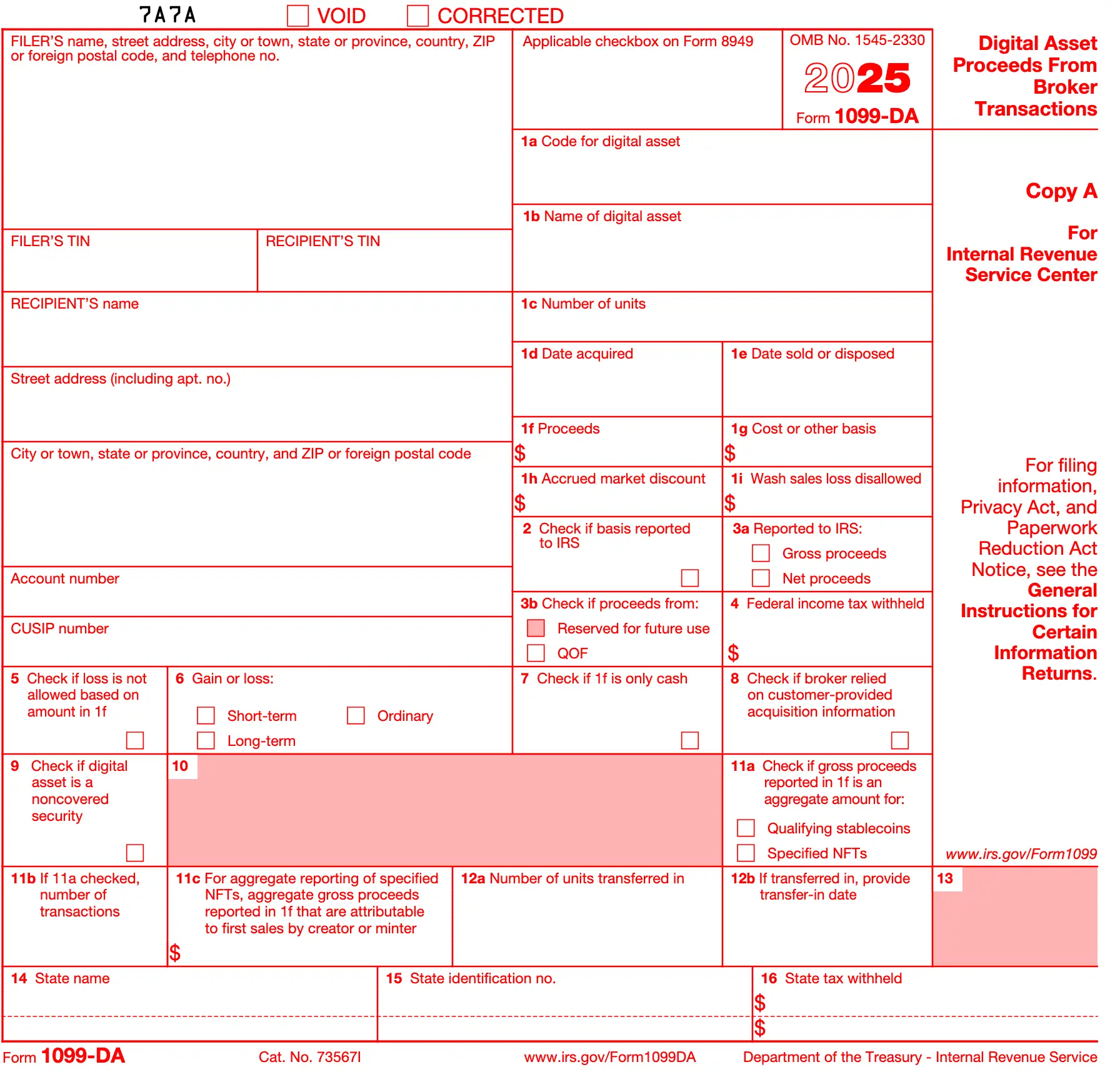
The Internal Revenue Service reminds tax professionals that the new form brokers use to furnish statements including proceeds from certain digital asset transactions will be sent to taxpayers in early 2026 but there are steps that can be taken now to help get their clients get ready.
The new
Form 1099-DA 📌 is used by brokers to report certain transactions involving digital assets that took place beginning in calendar year 2025. Brokers will need to provide a statement reflecting the information reported to the IRS on Form 1099-DA to taxpayers by Feb. 17.
The statements reflecting information reported on Form 1099-DA are different from some other statements taxpayers receive showing information reported on other IRS forms because most of these statements will not provide the basis of the taxpayers’ digital asset transaction(s) for the 2025 tax year. Basis must be calculated by taxpayers before their 2025 tax return can be filed.
Detailed recordkeeping is critical for reporting the basis accurately on behalf of taxpayers. Decentralized Finance (DeFi) brokers and some foreign brokers are not required to file a Form 1099-DA with the IRS or furnish a statement to taxpayers showing their digital asset transaction(s).
Tax professionals who use software to assist clients should ensure they’re using trusted software and pay close attention to taxpayer information. It’s important that all data used to calculate basis is complete and accurate.
At a minimum, tax professionals should:
- Review and reconcile all transactions which may be spread over multiple exchanges, wallets, and accounts
- Apply appropriate cost basis methods and document findings
- Accurately categorize income events
Issue 13 – New Code “Y” on Form 1099R
In 2025, a new code "Y" is being added to Box 7 of Form 1099-R to specifically identify a qualified charitable distribution (QCD) from an IRA. This change is designed to make reporting QCDs simpler and more accurate for both taxpayers and the IRS.
Qualified Charitable Distributions (QCDs).
Generally, a QCD is a nontaxable distribution made directly by the trustee of the IRA to an organization eligible to receive tax-deductible contributions. See Qualified charitable distributions (QCDs) in Pub. 590-B for more information.
To report a QCD use code Y with:
- Code 7 for a QCD from a non-inherited (normal distribution) IRA,
- Code 4 for a QCD from an inherited (death distribution) IRA, or
- Code K for a QCD reporting distributions of traditional IRA assets not having a readily available FMV that are either from non-inherited or inherited IRAs.
We have heard that QCD’s will be reported separately from the gross distribution, but the instructions to Form 1099-R does not specifically state that information. Use CAUTION when reporting OCD’s and ask client to provide documentation to support the direct contribution.
It is possible separate reporting will be required, but at this early stage we CAUTION you to use due diligence when determining this issue.
Issue 14 – SALT Cap Issues
Temporary SALT Cap Increase
The SALT cap goes from $10,000 to $40,000 in 2025 (one-half for married filing separately). The cap will further increase by 1% a year until 2029, then returns to $10,000 in 2030.
| Year |
SALT Cap |
| 2025 |
$40,000 |
| 2026 |
$40,400 |
| 2027 |
$40,804 |
| 2028 |
$41,212 |
| 2029 |
$41,624 |
| 2030 |
$10,000 |
Income-Based Phaseout
However, the new cap isn’t $40,000 for some high earners, because it has an income-based phaseout. The SALT cap drops by 30% of the Modified Adjusted Gross Income (MAGI) above $500,000. When the MAGI reaches $600,000, the SALT cap is back to the old $10,000.
The MAGI for the phaseout is the AGI for most people. It doesn’t add back untaxed Social Security or tax-free muni-bond interest. The “modified” part is only for
foreign earned income exclusion 📌 and residents in Puerto Rico, Guam, American Samoa, and the Northern Mariana Islands.
The table below shows how the SALT cap is phased out with income. Interpolate for an income between two rows in this table.
2025 MAGI vs. SALT Cap
Estimated cap reduction based on Modified AGI
| 2025 MAGI |
SALT Cap |
| $500,000 or less |
$40,000 |
| $510,000 |
$37,000 |
| $520,000 |
$34,000 |
| $530,000 |
$31,000 |
| $540,000 |
$28,000 |
| $550,000 |
$25,000 |
| $560,000 |
$22,000 |
| $570,000 |
$19,000 |
| $580,000 |
$16,000 |
| $590,000 |
$13,000 |
| $600,000 or more |
$10,000 |
Phaseout Starting Thresholds
The starting point for the phaseout also increases by 1% a year through 2029.
There's no phaseout in 2030 when the SALT cap goes back to $10,000.
| Year |
Phaseout Starts At |
| 2025 |
$500,000 |
| 2026 |
$505,000 |
| 2027 |
$510,050 |
| 2028 |
$515,151 |
| 2029 |
$520,302 |
| 2030 |
No phaseout |
Which taxes and fees are NOT covered by the SALT deduction?
According to the IRS, the taxes and fees that taxpayers cannot claim as SALT deductions include, but are not limited to:
- Federal income taxes
- Social security taxes
- Transfer taxes, such as taxes imposed on the sale of property
- Stamp taxes
- Homeowner's association fees
- Estate and inheritance taxes
- Service charges for water, sewer, or trash collection
Issue 15 – Obtaining A Copy of Gift Tax Returns Previously Filed
Filing Process:
Enter the donor's name and Social Security Number on Lines 1a and 1b.
⤵
If the donor is deceased, enter the estate representative's information on Line 3 and attach substantiating documents, such as letters of testamentary.
⤵
On Line 6, enter "Form 709" for the type of return requested.
⤵
On Line 7, specify the tax year for the return (e.g., 12/31/2024).
⤵
Sign and date the form.
⤵
Include fee.
EIN – Employer Identification Number
Estate Definitions:
Estate: An estate is a legal entity created as the result of a person’s death. The decedent’s estate is a separate legal entity for federal tax purposes. An estate consists of real and/or personal property of the deceased person. The estate pays any debts owed by the decedent and then distributes the balance of the estate’s assets to the beneficiaries of the estate. The estate exists until the final distribution of the assets is made to the heirs and other beneficiaries.
Fiduciary: A fiduciary is any person acting in a fiduciary capacity for any other person. A fiduciary for a decedent’s estate can be an executor, administrator, personal representative, or person in possession of property of a decedent’s estate. The primary duties of the fiduciary are to collect all the decedent’s assets, pay the creditors, and distribute the remaining assets to the heirs or other beneficiaries.
Form(s):
- Estates file either Form 706, United States Estate (and Generation-Skipping Transfer) Tax Return, or
- Form 1041, U.S. Fiduciary Return of Income, plus other returns that apply (such as employment or excise tax returns)
You will need a new EIN if any of the following are true:
- A trust is created with estate funds. Such trust is not simply a continuation of the estate.
- You represent an estate that operates a business after the owner’s death.
You will NOT need a new EIN if any of the following are true:
- The administrator, personal representative, or executor changes
- The beneficiaries of estate change
Trust Definitions - Trust:
A trust is an arrangement through which trustees take title to property for the purpose of protecting or conserving it for the beneficiaries under the ordinary rules applied in chancery or probate courts. A trust is a legal entity created under state law and taxed under federal law. A trust may be created during an individual’s lifetime (inter vivos) or at the time of his or her death under a will (testamentary).
Trusts include guardianships, custodianships, conservatorships, receiverships, escrow accounts, Ginnie Mae (GNMA) and Fannie Mae (FNMA) pools.
Fiduciary/Trustee:
A fiduciary is an individual or organization charged with the duty to act for the benefit of another. A trustee is a fiduciary. The trustee obtains legal title to the trust assets and is required to administer the trust on behalf of the beneficiaries according to the express terms and provisions of the trust agreement.
Beneficiary:
A beneficiary is a person designated as a recipient of funds or other property under a trust or an estate. Grantor: The grantor (also known as trustor, settlor, or creator) is the creator of the trust relationship and is generally the owner of the assets initially contributed to the trust. The grantor generally establishes, in the trust instrument, the terms and provisions of the trust relationship between the grantor, the trustee, and the beneficiary. The grantor may retain control over all or a portion of the trust, which may result in the grantor being subject to tax on the income from that portion of the trust.
Revocable/Irrevocable Trust:
An irrevocable trust is a trust, which, by its terms, cannot be modified, amended, or revoked. For tax purposes, an irrevocable trust can be treated as a simple, complex, or grantor trust, depending on the powers listed in the trust instrument.
A revocable trust may be revoked and is considered a grantor trust (IRC § 676). State law and the trust instrument establish whether a trust is revocable or irrevocable. If the trust instrument is silent on revocability, then most states consider the trust revocable.
Living Trust:
A living person creates an inter vivos trust during that person’s lifetime. An inter vivos trust can be established as revocable or irrevocable. An inter vivos trust can be a simple, complex, or grantor trust depending on the trust instrument.
Testamentary Trust:
A testamentary trust is created by a will, which begins its existence upon the death of the person making the will, when property is transferred from the decedent’s estate. Testamentary trusts are generally simple or complex trusts. A testamentary trust is irrevocable by definition, as it comes into being at the death of the grantor. A “trust under the will’ is the same as a testamentary trust.
Conservatorship:
Trust, not an estate, which is usually set up for an incompetent person.
Guardianship/Custodianship:
A trust usually set up for a minor. Form(s): Form 1041 U.S. Fiduciary Return of Income, plus other returns that apply (such as employment tax returns).
You will need a new EIN if any of the following are true:
- A trust changes to an estate
- A living (inter vivos) trust changes to a testamentary trust
- The revocable trust changes to an irrevocable trust
You will NOT need a new EIN if any of the following are true:
- The trustee changes
- The grantor or beneficiary changes his or her name or address.
Note: Separate EINs are needed if one person is the grantor/maker of multiple trusts. For example, if you have a trust for each of your grandchildren, each trust must have a separate EIN and file a separate tax return. However, a single trust with several beneficiaries requires only one EIN.
Line 1 - Enter the first name, middle initial and last name of the decedent, followed by “Estate”.
⤵
Line 2 - "N/A", Line 3 - Enter the name of the executor, administrator, or other fiduciaries.
⤵
Lines 4a-b - Enter the mailing address. This is the address where all IRS correspondence will be sent.
⤵
Lines 5a-b - Enter only if different from the mailing address on Lines 4a-b.
⤵
Line 6 - Enter the county and state where the will is probated.
⤵
Line 7a-b - "N/A", Line 8a - "N/A", Line 8b - "N/A", Line 8c - "N/A", Line 9a - Check “Estate” and enter the SSN of the decedent on the line provided.
⤵
Line 9b - "N/A", Line 10 - Check the “Other” box and enter “Estate Administration”.
⤵
Line 11 - Enter the date the estate was funded.
⤵
Line 12 - Enter the last month of your accounting year or tax year.
⤵
Line 13 - Enter the highest number of employees expected in the next 12 months (Agricultural, Household or Other). If none, enter 0 and skip to Line 16.
⤵
Line 14 - If you expect your employment tax liability to be $1,000 or less in a full calendar year and want to file Form 944 annually instead of Forms 941 quarterly check “Yes”. (To file Forms 941, check “No”.)
⤵
Line 15 - If the estate has (or will have) employees enter the date the estate will begin to pay wages (Month, Date, Year) If no employees, leave blank.
⤵
Line 16 - Check the “Finance & Insurance” box.
⤵
Line 17 - Enter “Estate Administration”.
⤵
Line 18 - If the applicant shown on line one (1) ever previously applied for and received an EIN, check “yes”. If “yes” enter previous EIN on the line.
⤵
Complete the Third Party Designee section only if you want to authorize the named individual to receive the EIN and answer questions about the completion of this form. You must also sign the application for the authorization to be valid. Name and Title: Print the name and title of the fiduciary. Telephone Number: Enter the telephone number where we can reach you if we have questions about your application. Signature: The fiduciary must sign the application if the Third Party Designee section is completed. Note: If you use an estate to create a trust, the trust is considered a different entity type and a new EIN is needed.
Issue 16 – Last Chance to Enroll in EFTPS
Executive Order 14247 - Modernizing Payments to and From America's Bank
Account
March 25, 2025
By the authority vested in me as President by the Constitution and the laws of the United States of America, it is hereby ordered:
Section 1. Purpose. The continued use of paper-based payments by the Federal Government, including checks and money orders, flowing into and out of the United States General Fund, which might be thought of as America's bank account, imposes unnecessary costs; delays; and risks of fraud, lost payments, theft, and inefficiencies. Mail theft complaints have increased substantially since the COVID–19 pandemic. Historically, Department of the Treasury checks are 16 times more likely to be reported lost or stolen, returned undeliverable, or altered than an electronic funds transfer (EFT). Maintaining the physical infrastructure and specialized technology for digitizing paper records cost the American taxpayer over $657 million in Fiscal Year 2024 alone.
This order promotes operational efficiency by mandating the transition to electronic payments for all Federal disbursements and receipts by digitizing payments to the extent permissible under applicable law (but not, for avoidance of doubt, to establish a Central Bank Digital Currency).
Sec. 2. Policy. It is the policy of the United States to defend against financial fraud and improper payments, increase efficiency, reduce costs, and enhance the security of Federal payments.
Issue 17 – Applicable Federal Rates for October 2025, Rev. Rul. 2025-19
REV. RUL. 2025-19 TABLE 1
Applicable Federal Rates (AFR) for October 2025
| |
Period for Compounding
|
|
Annual |
Semiannual |
Quarterly |
Monthly |
| Short-term |
| AFR |
3.81% |
3.77% |
3.75% |
3.74% |
| 110% AFR |
4.19% |
4.15% |
4.13% |
4.11% |
| 120% AFR |
4.57% |
4.52% |
4.49% |
4.48% |
| 130% AFR |
4.96% |
4.90% |
4.87% |
4.85% |
| Mid-term |
| AFR |
3.87% |
3.83% |
3.81% |
3.80% |
| 110% AFR |
4.25% |
4.21% |
4.19% |
4.17% |
| 120% AFR |
4.65% |
4.60% |
4.57% |
4.56% |
| 130% AFR |
5.04% |
4.98% |
4.95% |
4.93% |
| 150% AFR |
5.83% |
5.75% |
5.71% |
5.68% |
| 175% AFR |
6.81% |
6.70% |
6.64% |
6.61% |
| Long-term |
| AFR |
4.73% |
4.68% |
4.65% |
4.64% |
| 110% AFR |
5.22% |
5.15% |
5.12% |
5.10% |
| 120% AFR |
5.70% |
5.62% |
5.58% |
5.56% |
| 130% AFR |
6.17% |
6.08% |
6.03% |
6.00% |
REV. RUL. 2025-19 TABLE 2
Adjusted AFR for October 2025
| |
Period for Compounding
|
|
Annual |
Semiannual |
Quarterly |
Monthly |
Short-term
adjusted AFR |
2.88% |
2.86% |
2.85% |
2.84% |
Mid-term
adjusted AFR |
2.93% |
2.91% |
2.90% |
2.89% |
Long-term
adjusted AFR |
3.58% |
3.55% |
3.53% |
3.52% |
REV. RUL. 2025-19 TABLE 3
Rates Under Section 382 for October 2025
| Adjusted federal long-term rate for the current month |
3.58% |
|
Long-term tax-exempt rate for ownership changes during the current month
(the highest of the adjusted federal long-term rates for the current month and the prior two months.)
|
3.65% |
REV. RUL. 2025-19 TABLE 4
Appropriate Percentages Under Section 42(b)(1) for October 2025
Note: Under section 42(b)(2), the applicable percentage for non-federally subsidized new buildings placed in service after July 30, 2008, shall not be less than 9%.
| Appropriate percentage for the 70% present value low-income housing credit |
8.00% |
| Appropriate percentage for the 30% present value low-income housing credit |
3.43% |
REV. RUL. 2025-19 TABLE 5
Rate Under Section 7520 for October 2025
|
Applicable federal rate for determining the present value of an annuity, an interest for life or a term of years, or a remainder or reversionary interest
|
4.60% |
FAQs - Frequently Asked Questions
Q1. What should clients do about the new tips and overtime items—do they affect 2025 W-2s?
For 2025, keep using a reasonable method to track/report overtime wages and tips; form changes are not in effect until 2026. Starting with the
draft 2026 W-2, new items (TA, TP, TT and Box 14b Treasury Occupation Code) appear. See
Issue 1 for details and draft links.
Q2. Are paper federal benefit checks ending—and how do clients switch to electronic payments?
Yes. Treasury plans to phase out most paper checks on Sept. 30, 2025. Clients who still receive paper checks should enroll in direct deposit or consider the Direct Express® card. See enrollment options and phone numbers in
Issue 4.
Q3. How does the 2025–2029 SALT cap change work—and who gets phased out?
The cap is $40,000 in 2025 and increases ~1% annually through 2029, then reverts to $10,000 in 2030. A 30% income-based phaseout applies above $500,000 MAGI; by $600,000 MAGI the cap is back to $10,000. See tables and examples in
Issue 14.
Q4. What’s changing with catch-up contributions—who must use Roth and when?
Final rules require age-50+ employees with prior-year wages above the indexed threshold to make catch-ups as Roth for tax years beginning after Dec. 31, 2026 (with certain later dates for governmental/CBA plans). See differences from the proposal and timelines in
Issue 11.
Q5. What should we expect from Form 1099-DA for digital assets—what prep should pros do now?
Brokers will furnish 1099-DA statements for 2025 transactions in early 2026, but many won’t provide basis for 2025. Pros should reconcile all wallets/exchanges, apply and document cost-basis methods, and categorize income events. See links and action steps in
Issue 12.