Tax Rates – for 2020
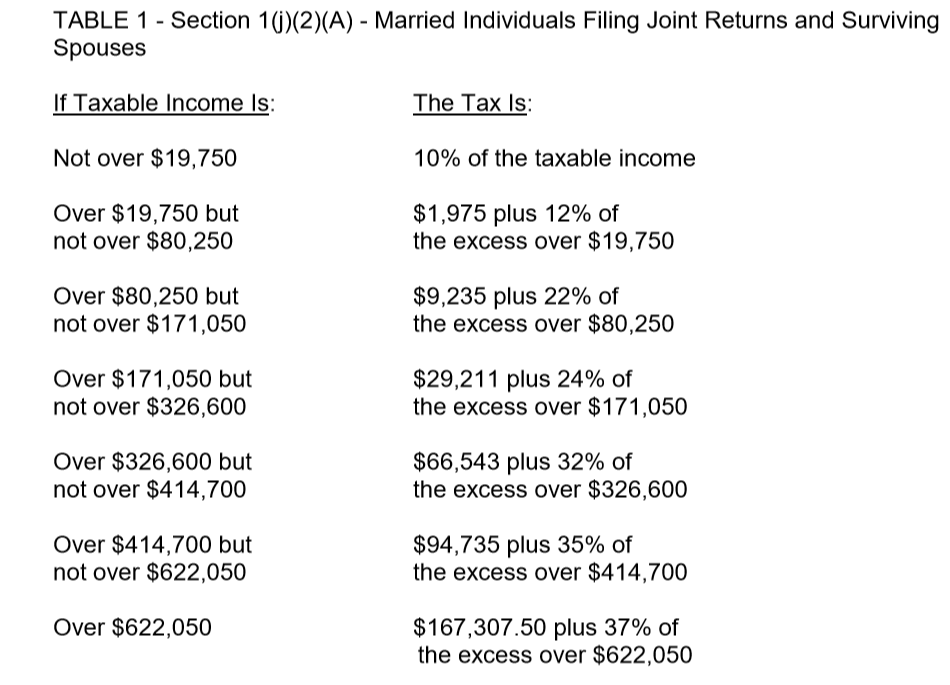
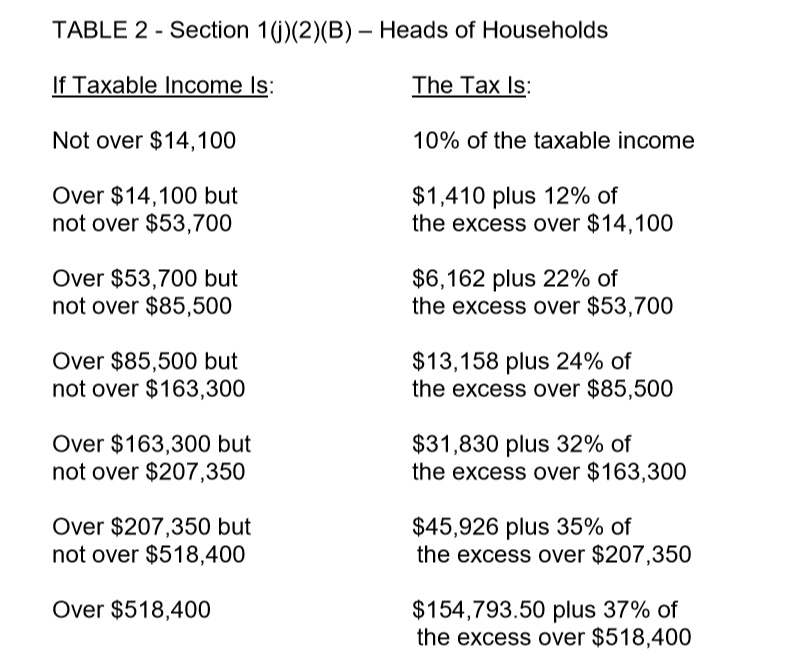
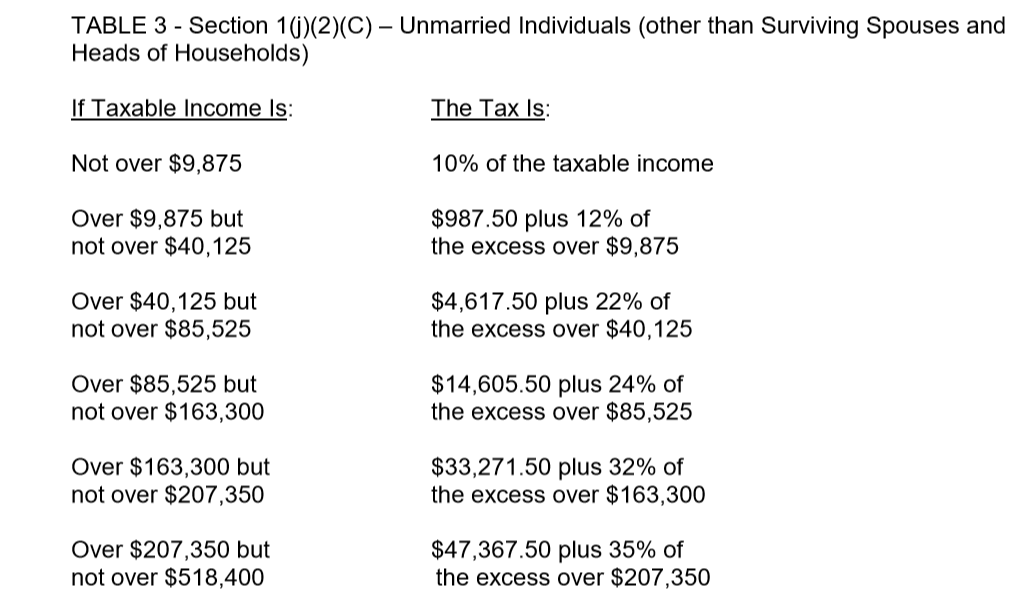
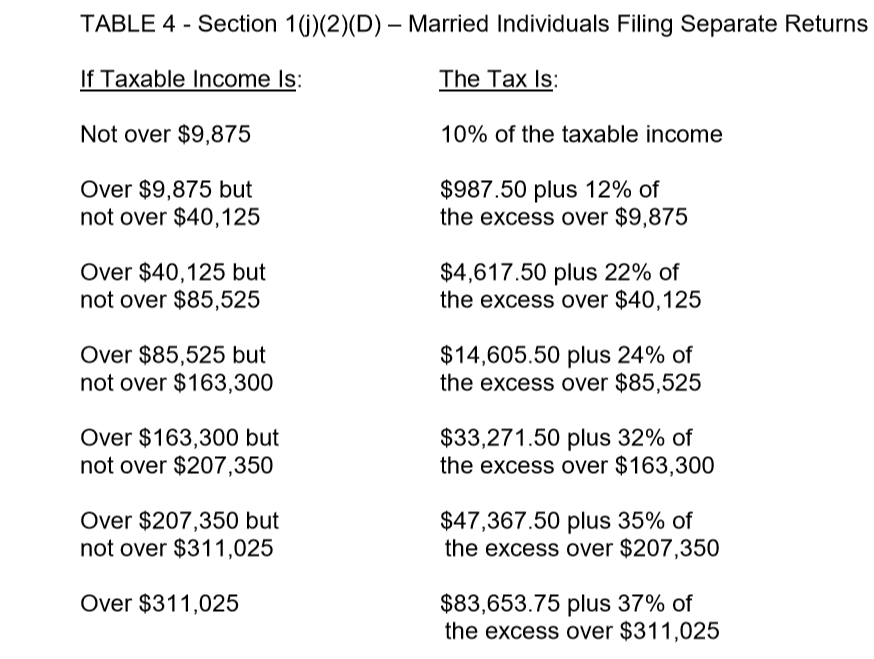
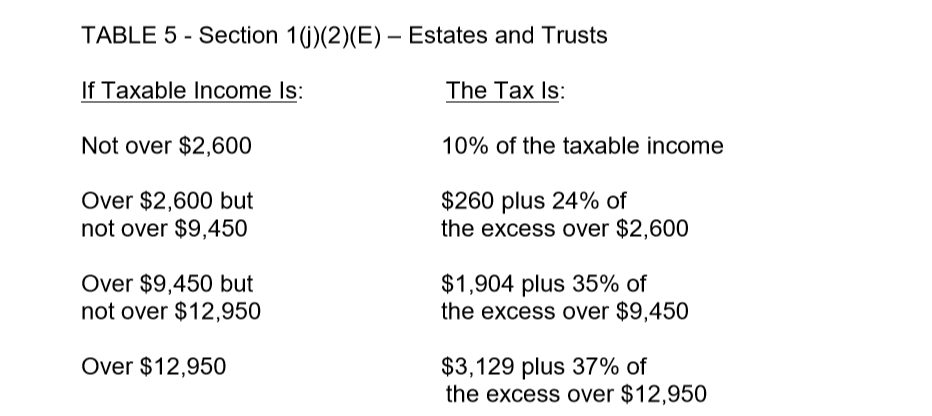
Unearned Income of Minor Children (the "Kiddie Tax") for 2020
For taxable years beginning in 2020, the amount in § 1(g)(4)(A)(ii)(I), which is used to reduce the net unearned income reported on the child's return that is subject to the "kiddie tax," is $1,100. This $1,100 amount is the same as the amount provided in § 63(c)(5)(A), as adjusted for inflation. The same $1,100 amount is used for purposes of § 1(g)(7) (that is, to determine whether a parent may elect to include a child's gross income in the parent's gross income and to calculate the "kiddie tax").
Maximum Capital Gains Rate for 2020
For taxable years beginning in 2020, the Maximum Zero Rate Amount under § 1(h)(1)(B)(i) is:
- $80,000 in the case of a joint return or surviving spouse
- $40,000 in the case of a married individual filing a separate return,
- $53,600 in the case of an individual who is a head of household (§ 2(b)),
- $40,000 in the case of any other individual (other than an estate or trust), and
- $2,650 in the case of an estate or trust.
The Maximum 15-percent Rate Amount under § 1(h)(1)(C)(ii)(l) is:
- $496,600 in the case of a joint return or surviving spouse,
- $248,300 in the case of a married individual filing a separate return,
- $469,050 in the case of an individual who is the head of a household (§ 2(b)),
- $441,450 in the case of any other individual (other than an estate or trust), and
- $13,150 in the case of an estate or trust.
Adoption Credit for 2020
For taxable years beginning in 2020, under § 23(a)(3) the credit allowed for an adoption of a child with special needs is $14,300. For taxable years beginning in 2020, under § 23(b)(1) the maximum credit allowed for other adoptions is the amount of qualified adoption expenses up to $14,300. The available adoption credit begins to phase out under § 23(b)(2)(A) for taxpayers with modified adjusted gross income in excess of $214,520 and is completely phased out for taxpayers with modified adjusted gross income of $254,520 or more.
Adoptions Assistance Programs 2020
The amount that can be excluded from an employee’s gross income for the adoption of a child with special needs is $14,300 and the maximum amount that can be excluded from an employee’s gross income for the amounts paid or expenses incurred by an employer for qualified adoption expenses furnished pursuant to an adoption assistance program for other adoptions by the employee is $14,300.
Child Tax Credit
For taxable years beginning in 2020, the value used in § 24(d)(1)(A) to determine the amount of credit under § 24 that may be refundable is $1,400.
Lifetime Learning Credit
For taxable years beginning in 2020, a taxpayer's modified adjusted gross income in excess of $59,000 ($118,000 for a joint return) is used to determine the reduction under § 25A(d)(2) in the amount of the Lifetime Learning Credit otherwise allowable under § 25A(a)(2).
Earned Income Credit for 2020
Number of Children
Excessive Investment Income for 2020
The earned income tax credit is not allowed under § 32(i) if the aggregate amount of certain investment income exceeds $3,650.
Employee Health Insurance Expense of Small Employers in 2020
The dollar amount in effect under § 45R(d)(3)(B) is $27,600.
Exemption Amounts for Alternative Minimum Tax in 2020
The exemption amounts under § 55(d)(1) are:
For taxable years beginning in 2020, under § 55(b)(1), the excess taxable income above which the 28 % tax rate applies is:
For taxable years beginning in 2020, the amounts used under § 55(d)(2) to determine the phaseout of the exemption amounts are:
Alternative Minimum Tax Exemption for a Child Subject to the "Kiddie Tax for 2020
For a child to whom the § 1(g) "kiddie tax" applies, the exemption amount under §§ 55(d) and 59(j) for purposes of the alternative minimum tax under § 55 may not exceed the sum of (1) the child's earned income for the taxable year, plus (2) $7,900.
Certain Expenses of Elementary and Secondary School Teachers for 2020
The amount for an educator remains at $250.
Standard Deduction for 2020
Dependent Standard Deduction for 2020
The standard deduction amount for an individual who may be claimed as a dependent by another taxpayer cannot exceed the greater of (1) $1,100, or (2) the sum of $350 and the individual's earned income.
Aged or Blind Additional Standard Deduction for 2020
The additional standard deduction amount for the aged or the blind is $1,300. The additional standard deduction amount is increased to $1,650 if the individual is also unmarried and not a surviving spouse.
Cafeteria Plans for 2020
The dollar limitation on voluntary employee salary reductions for contributions to health flexible spending arrangements is $2,750.
Qualified Transportation Fringe Benefit for 2020
The monthly limitation regarding the aggregate fringe benefit exclusion amount for transportation in a commuter highway vehicle and any transit pass is $270. The monthly limitation regarding the fringe benefit exclusion amount for qualified parking is $270.
Income from United States Savings Bonds for Taxpayers Who Pay Qualified Higher Education Expenses for 2020
The exclusion regarding income from United States savings bonds for taxpayers who pay qualified higher education expenses, begins to phase out for modified adjusted gross income above $123,550 for joint returns and $82,350 for all other returns. The exclusion is completely phased out for modified adjusted gross income of $153,550 or more for joint returns and $97,350 or more for all other returns.
Gross Income Limitation for a Qualifying Relative for 2020
The exemption amount is $4,300.
Election to Expense Certain Depreciable Assets in 2020
The aggregate cost of any § 179 property that a taxpayer elects to treat as an expense cannot exceed $1,040,000 and, the cost of any sport utility vehicle that may be taken into account under § 179 cannot exceed $25,900. The $2,590,000 limitation is reduced (but not below zero) by the amount the cost of § 179 property placed in service during the 2020 taxable year exceeds $2,590,000.
Qualified Business Income Thresholds for 2020
$326,600 for married filing joint returns.
$163,300 for married filing separate returns, and
$163,300 for all other returns.
Eligible Long-Term Care Premiums for 2020
The limitations regarding eligible long-term care premiums includible in the term "medical care," are as follows:
Medical Savings Accounts
Self-only coverage
For taxable years beginning in 2020, the term "high deductible health plan" as defined in § 220(c)(2)(A) means, for self-only coverage, a health plan that has an annual deductible that is not less than $2,350 and not more than $3,550, and under which the annual out-of-pocket expenses required to be paid (other than for premiums) for covered benefits do not exceed $4,750.
Family coverage
For taxable years beginning in 2020, the term "high deductible health plan" means, for family coverage, a health plan that has an annual deductible that is not less than $4,750 and not more than $7,100, and under which the annual out-of-pocket expenses required to be paid (other than for premiums) for covered benefits do not exceed $8,650.
Interest on Education Loans
For taxable years beginning in 2020, the $2,500 maximum deduction for interest paid on qualified education loans under § 221 begins to phase out under § 221(b)(2)(B) for taxpayers with modified adjusted gross income in excess of $70,000 ($140,000 for joint returns), and is completely phased out for taxpayers with modified adjusted gross income of $85,000 or more ($170,000 or more for joint returns).
Limitation on Use of Cash Method of Accounting
For taxable years beginning in 2020, a corporation or partnership meets the gross receipts test of § 448(c) for any taxable year if the average annual gross receipts of such entity for the 3-taxable-year period ending with the taxable year which precedes such taxable year does not exceed $26,000,000.
Threshold for Excess Business Loss
For taxable years beginning in 2020, in determining a taxpayer’s excess business loss, the amount under § 461(l)(3)(A)(ii)(II) is $259,000 ($518,000 for joint returns).
Foreign Earned Income Exclusion
For taxable years beginning in 2020, the foreign earned income exclusion amount under § 911(b)(2)(D)(i) is $107,600.
Valuation of Qualified Real Property in Decedent's Gross Estate
For an estate of a decedent dying in calendar year 2020, if the executor elects to use the special use valuation method under § 2032A for qualified real property, the aggregate decrease in the value of qualified real property resulting from electing to use § 2032A for purposes of the estate tax cannot exceed $1,180,000.
Annual Exclusion for Gifts
(1) For calendar year 2020, the first $15,000 of gifts to any person (other than gifts of future interests in property) are not included in the total amount of taxable gifts under § 2503 made during that year.
(2) For calendar year 2020, the first $157,000 of gifts to a spouse who is not a citizen of the United States (other than gifts of future interests in property) are not included in the total amount of taxable gifts under §§ 2503 and 2523(i)(2) made during that year.
Notice of Large Gifts Received from Foreign Persons
For taxable years beginning in 2020, § 6039F authorizes the Treasury Department and the Internal Revenue Service to require recipients of gifts from certain foreign persons to report these gifts if the aggregate value of gifts received in the taxable year exceeds $16,649.
Persons Against Whom a Federal Tax Lien Is Not Valid
For calendar year 2020, a federal tax lien is not valid against (1) certain purchasers under § 6323(b)(4) who purchased personal property in a casual sale for less than $1,620, or (2) a mechanic's lien or under § 6323(b)(7) who repaired or improved certain residential property if the contract price with the owner is not more than $8,100.
Property Exempt from Levy
For calendar year 2020, the value of property exempt from levy under § 6334(a)(2) (fuel, provisions, furniture, and other household personal effects, as well as arms for personal use, livestock, and poultry) cannot exceed $9,690. The value of property exempt from levy under § 6334(a)(3) (books and tools necessary for the trade, business, or profession of the taxpayer) cannot exceed $4,850.
Exempt Amount of Wages, Salary, or Other Income
For taxable years beginning in 2020, the dollar amount used to calculate the amount determined under § 6334(d)(4)(B) is $4,300.
Interest on a Certain Portion of the Estate Tax Payable in Installments
For an estate of a decedent dying in calendar year 2020, the dollar amount used to determine the "2-percent portion" (for purposes of calculating interest under § 6601(j)) of the estate tax extended as provided in § 6166 is $1,570,000.
Failure to File Tax Return
In the case of any return required to be filed in 2021, the amount of the addition to tax under § 6651(a) for failure to file a tax return within 60 days of the due date of such return (determined with regard to any extensions of time for filing) shall not be less than the lesser of $330 or 100 percent of the amount required to be shown as tax on such returns
Failure to File Partnership Return
In the case of any return required to be filed in 2021, the dollar amount used to determine the amount of the penalty under § 6698(b)(1) is $210. .56 Failure to File S Corporation Return. In the case of any return required to be filed in 2021, the dollar amount used to determine the amount of the penalty under § 6699(b)(1) is $210.
Revocation or Denial of Passport in Case of Certain Tax Delinquencies
For calendar year 2020, the amount of a serious delinquent tax debt under § 7345 is $53,000.
Attorney Fee Awards
For fees incurred in calendar year 2020, the attorney fee award limitation under § 7430(c)(1)(B)(iii) is $210 per hour.
Periodic Payments Received Under Qualified Long-Term Care Insurance Contracts or Under Certain Life Insurance Contracts
For calendar year 2020, the stated dollar amount of the per diem limitation under § 7702B(d)(4), regarding periodic payments received under a qualified long-term care insurance contract or periodic payments received under a life insurance contract that are treated as paid by reason of the death of a chronically ill individual, is $380.
Qualified Small Employer Health Reimbursement Arrangement
For taxable years beginning in 2020, to qualify as a qualified small employer health reimbursement arrangement under § 9831(d), the arrangement must provide that the total amount of payments and reimbursements for any year cannot exceed $5,250 ($10,600 for family coverage).
Refundable Credit for Coverage Under a Qualified Health Plan
For taxable years beginning in 2020, the limitation on tax imposed under § 36B(f)(2)(B) for excess advance credit payments is determined using the following table:
The contribution limit for employees who participate in 401(k), 403(b), most 457 plans, and the federal government’s Thrift Savings Plan is increased from $19,000 to $19,500.
The catch-up contribution limit for employees aged 50 and over who participate in these plans is increased from $6,000 to $6,500.
The limitation regarding SIMPLE retirement accounts for 2020 is increased to $13,500, up from $13,000 for 2019.
The income ranges for determining eligibility to make deductible contributions to traditional Individual Retirement Arrangements (IRAs), to contribute to Roth IRAs and to claim the Saver’s Credit all increased for 2020.
Taxpayers can deduct contributions to a traditional IRA if they meet certain conditions. If during the year either the taxpayer or his or her spouse was covered by a retirement plan at work, the deduction may be reduced, or phased out, until it is eliminated, depending on filing status and income. (If neither the taxpayer nor his or her spouse is covered by a retirement plan at work, the phase-outs of the deduction do not apply.) Here are the phase-out ranges for 2020:
- For single taxpayers covered by a workplace retirement plan, the phase-out range is $65,000 to $75,000, up from $64,000 to $74,000.
- For married couples filing jointly, where the spouse making the IRA contribution is covered by a workplace retirement plan, the phase-out range is $104,000 to $124,000, up from $103,000 to $123,000.
- For an IRA contributor who is not covered by a workplace retirement plan and is married to someone who is covered, the deduction is phased out if the couple’s income is between $196,000 and $206,000, up from $193,000 and $203,000.
- For a married individual filing a separate return who is covered by a workplace retirement plan, the phase-out range is not subject to an annual cost-of-living adjustment and remains $0 to $10,000.
The income phase-out range for taxpayers making contributions to a Roth IRA is $124,000 to $139,000 for singles and heads of household, up from $122,000 to $137,000. For married couples filing jointly, the income phase-out range is $196,000 to $206,000, up from $193,000 to $203,000. The phase-out range for a married individual filing a separate return who makes contributions to a Roth IRA is not subject to an annual cost-of-living adjustment and remains $0 to $10,000.
The income limit for the Saver’s Credit (also known as the Retirement Savings Contributions Credit) for low- and moderate-income workers is $65,000 for married couples filing jointly, up from $64,000; $48,750 for heads of household, up from $48,000; and $32,500 for singles and married individuals filing separately, up from $32,000.
Key limit remains unchanged
The limit on annual contributions to an IRA remains unchanged at $6,000. The additional catch-up contribution limit for individuals aged 50 and over is not subject to an annual cost-of-living adjustment and remains $1,000.